Led by Miss Curtis and Mrs Stack
Our School’s Reading Intentions

· To encourage every child to read widely, promoting and encouraging a lifelong love of the written word.
· To provide opportunity for every child to become a confident and fluent reader.
· To read widely, both fiction and non-fiction, and enhance all areas of the curriculum with new-found knowledge and understanding of the world.
· To provide regular opportunities for children of all ages to be read to, read out loud, and read independently.
· To feed children’s imaginations and foster creativity.
· To develop a wide vocabulary which extends beyond their every-day experiences.
· To develop comprehension skills which will support future learning at secondary school and beyond.

Organisation, Implementation and the Planning of Reading
Overview: We teach reading from the beginning of a child’s school journey using Read, Write, Inc. phonics. Once children have successfully mastered the ability to decode and comprehend, they move to a progressive system of whole class reading using VIPERS. This policy will explain the process fully.
Early Years Foundation Stage In the Foundation Stage, an over-arching theme is planned each half term first and foremost to develop ‘Communication and Language’, whilst offering opportunities for the children to cover a range of objectives, providing engagement, motivation, and purpose for learning. Children are given access to a wide range of reading materials (books, poems, and other written materials) to ignite their interest. We believe that the most effective method of ensuring progress is a balance between adult-led activities and independent learning.
A bespoke curriculum has been developed by the EYFS team, selecting statements from ‘Birth to Five Matters 2021’ and ‘Development Matters 2021’ tailored to the needs of the pupils within our setting. The Early Years Foundation curriculum consists of seven different areas that the children will learn and be assessed on throughout the year.
Children should develop the 3 prime areas first. These are: Communication and language (CL), Personal, social and emotional development (PSED) and Physical development (PD).
These prime areas are those most essential for a child’s healthy development and future learning. As children grow, the prime areas will help them to develop skills in 4 specific areas. These are: Literacy, Mathematics, Understanding the world (UW), Expressive arts and design (EAD).
We use the Read, Write Inc. phonics programme daily from the Summer term of Mighty Oaks (pre-school) to enable children to acquire a good knowledge of phonics before entering Reception where daily phonics continues.

Read Write Inc. Phonics The programme is for:
– Pupils in Year R to Year 3 who are learning to read
– Daily Fast Track available for those pupils from reception to Year 3 who are lower than expected or at risk of falling behind.
– Pupils in Year 4-Year 6 using elements of the RWI programme if applicable e.g story book activities.
In Read Write Inc. Phonics pupils:
– Decode letter-sound correspondences quickly and effortlessly, using their phonic knowledge and skills
– Read common exception words on sight
– Understand what they read
– Read aloud with fluency and expression
– Write confidently, with a strong focus on vocabulary and grammar
– Spell quickly and easily by segmenting the sounds in words
– Acquire good handwriting
In addition, we teach pupils to work effectively with a partner to explain and consolidate what they are learning. This provides the teacher with opportunities to assess learning and to pick up on difficulties, such as pupils’ poor articulation, or problems with blending or alphabetic code knowledge.
Where appropriate, we group pupils homogeneously, according to their progress in reading rather than their writing. This is because it is known that pupils’ progress in writing will lag behind progress in reading, especially for those whose motor skills are less well developed.
In Reception, we emphasise the alphabetic code. The pupils rapidly learn sounds and the letter or groups of letters they need to represent them. Simple mnemonics help them to grasp this quickly. This is especially useful for pupils at risk of making slower progress. This learning is consolidated daily. Pupils have frequent practice in reading high frequency words with irregular spellings–common exception words.
We make sure that pupils read books that are closely matched to their increasing knowledge of phonics and the common exception words. This is so that, early on, they experience success and gain confidence that they are readers. Re-reading and discussing these books with the teacher supports their increasingly fluent decoding.
Alongside this, the teachers read a wide range of stories, poetry and non-fiction to pupils; they are soon able to read these texts for themselves.
Embedding the alphabetic code early on means that pupils quickly learn to write simple words and sentences. We encourage them to compose each sentence aloud until they are confident to write independently. We make sure they write every day.
Pupils write at the level of their spelling knowledge. The quality of the vocabulary they use in their writing reflects the language they have heard in the books the teacher has read to them; they have also discussed what the words mean.
Our aim is for pupils to complete the phonics programme as quickly and proficiently as possible. The sooner they complete it, the sooner they will be able to choose books to read at their own interest and comprehension level.
Whole Class Guided Reading
Once children complete the Read Write Inc. (RWI) Phonics programme, they are taught in their year group using the VIPERS model of reading domains underpinned by the National Curriculum. Year 1 or 2 children, who finish the RWI programme, are taught in small groups before moving to KS2. Some KS2 children, with additional needs, may remain on RWI to support their progress at a level that is appropriate to their need.
Our VIPERS lessons integrate reading, writing, thinking, and spoken language in all activities, to ensure the daily development of children’s comprehension and wider literacy skills. At the heart of VIPERS, is the enjoyment of and engagement with a variety of carefully chosen whole class texts. We invest in class sets of books to give all children the opportunity to read entire works of literature and authors are carefully chosen across the school to build progression, offer diversity and encourage a love of reading.
Pupils are encouraged to take their own meaning from each text, becoming independent and critical thinkers. Comprehension activities are designed to help children to understand vocabulary, infer, predict, explain, retrieve and summarise a point of view. The children also make connections between texts and their own experiences.
In daily guided reading lessons, pupils:
– Read carefully chosen quality whole class texts
– Develop a deep understanding of what they read
– Learn to articulate their thoughts and ideas clearly to one another: they learn how to present and debate; to reason and justify their answers
– Learn to explain and write their ideas confidently and independently
Teachers read texts to the class – children hear the expert reader model how to read with meaning and expression and are also given the opportunity to read for themselves and with peers. Pupils are taught to articulate their thoughts and ideas out loud and to communicate what they know and understand. Pupils answer questions with a partner, comment on each other’s ideas, clarify each other’s thinking, and build upon each other’s thoughts and ideas. The teacher asks questions to take their thinking further and clears up any misconceptions. Partner discussion helps teachers assess what and how pupils are learning throughout the lesson.
Teachers also read a wide range of stories, poetry and non-fiction to pupils. Pupils are encouraged to choose books to read at their own interest and comprehension level.
Individual and Home Reading
We expect children to read at home every day if possible. The ability to read fluently is the key to all learning and as a school we take this part of children’s homework seriously. Reading is celebrated in classrooms using a bronze (three reads), silver (four reads), gold (five reads) and platinum (extra effort) system. Classes have star reader of the week where children’s reading is celebrated. In our weekly Achievement Assembly, every star reader is entered into a reading raffle, with a winner from KS1 and KS2 choosing a brand-new book to take home.
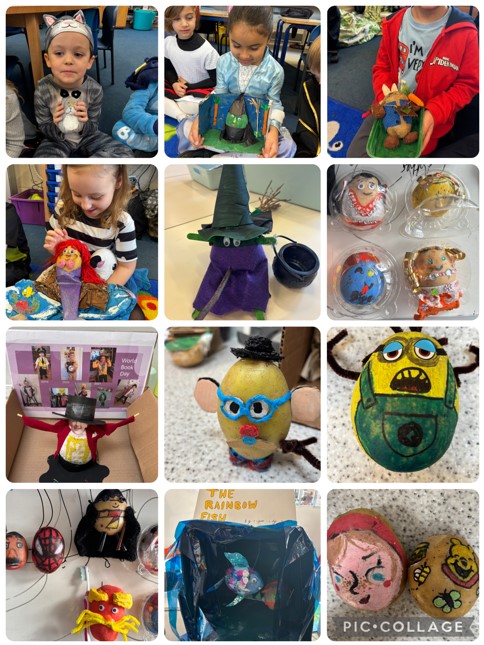
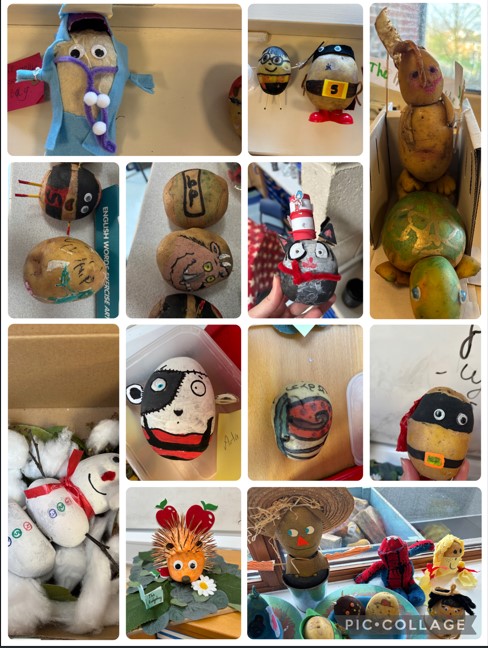
Other reading celebrations take place each year: children (and teachers) love to dress up as their favourite characters or a wonderful word on World Book Day; and we aim to invite an author into school regularly to further promote a love of reading.
Read Write Inc.: We support pupils to select appropriate books to take home, depending on what support they might receive at home. All pupils take home books that they have already read in the Read Write Inc. Phonics lesson. Stories and new vocabulary are explained and discussed so all pupils have access to the books they read. This means that they are confident to read at home, even if their parents cannot read with them. Pupils also take home share a story texts (fiction and non-fiction) that they cannot yet read for themselves but can be read to them by an adult at home.
KS2 readers: We encourage children to read widely and often. Every child has a school reading book to take home each day to read with an adult or independently – this will either be a reading scheme book or a class
library book, dependent on children’s reading ability. We do encourage all children in KS2 to read a staged reading scheme book. However, those who are confident readers can alternate this with their own choice of book. This will ensure that children are accessing progressive and challenging reading material suited to their level of development.
Home reading diaries: We encourage all children’s reading progress at home to be noted in their home reading diary. Parents and children are encouraged to write in this diary and make comments on what has been read. Reading diaries are regularly monitored by teaching assistants and class teachers, to ensure that all children (regardless of age), are reading at home. The reading diary will also be used as a communication book between school and home.
Parents, carers and the wider community We believe that parents’ involvement in their child’s learning is invaluable. Parents are actively encouraged to support their children at home. We hold two parents’ evenings each year (in the Autumn and Spring term) where parents can look at their children’s books and discuss attainment, targets and progress with their class teachers. In addition, we regularly invite parents into school for events such as family lunch and informal parents’ evenings.
Read, Write, Inc.: We invite parents/carers to sharing assemblies to show how they can help their children read at home. We would like them to help their children, but we also recognise that some are not well-placed to do this. If they do not, their children won’t suffer; it is our job to teach their children to read. We ensure that pupils whose parents do not attend keep up with their peers. We check that they make good progress in lessons, we give them extra one-to-one lessons, and we encourage them to read to themselves and to siblings at home. Each week, we send home phonics videos from the Ruth Miskin portal that are matched to the children’s RWI levels. http://www.ruthmiskin.com/en/parents/
Governors regularly monitor teaching and learning in school and as part of Curriculum Committee meeting will listen to children read and look at home/school diaries and reading journals.
Volunteer readers help specific children develop their reading skills and are predominantly used to tackle under-achievement, but they may read with all children in a class at the discretion of the class teacher. Volunteer readers work with children to boost their reading skills, comprehension, and enjoyment of books.
Please find attached further ways to support your child’s reading at home:
Parent Guide to Reading at Home 2026